The Pinjore Garden, officially known as Yadavindra Gardens, is one of the finest surviving examples of Mughal garden architecture in North India. Its history dates back to the late 17th century, during the reign of the Mughal emperor Aurangzeb.
History of Pinjore Garden
The garden was commissioned around 1661 CE by Nawab Fidai Khan, who served as a governor and court noble under Aurangzeb. Fidai Khan was also the architect of Pinjore Garden, making him both the patron and designer of this grand landscape. The site was strategically chosen at the foothills of the Shivalik range, allowing natural water flow and scenic views to enhance the garden’s layout.
After the decline of Mughal power, the garden fell into neglect and suffered damage during periods of political instability. In the 20th century, it was restored by Maharaja Yadavindra Singh, the last ruling Maharaja of Patiala. In his honour, the garden was renamed Yadavindra Gardens, though it continues to be popularly known as Pinjore Gardens.
Architecture of Pinjore Garden
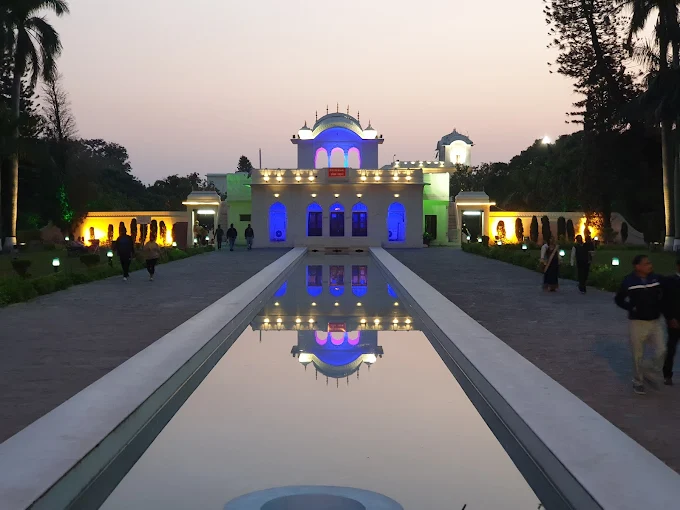
The architecture of Pinjore Garden follows the classical Mughal Charbagh concept, symbolising paradise on earth. Unlike flat Mughal gardens, Pinjore Garden is laid out on seven descending terraces, a design adapted to the sloping terrain of the valley.
Key architectural features include:
- Central water channel running through the length of the garden, lined with fountains and reflecting pools
- Symmetrical pathways and lawns, reflecting Mughal emphasis on balance and geometry
- Sheesh Mahal (Glass Palace), used as a royal retreat
- Rang Mahal, known for its decorative elements and vibrant setting
- Jal Mahal, positioned near water features to enhance cooling and visual appeal
Stone pavilions, arched gateways, and shaded corridors demonstrate refined Mughal craftsmanship, while the flowing water system highlights advanced hydraulic planning for its time.
Cultural Significance
Today, Pinjore Garden stands as an important heritage landscape of Haryana, representing the fusion of Mughal aesthetics with regional geography. Its historical depth, terraced architecture, and enduring beauty make it a valuable case study in Indo-Islamic garden design and a major cultural attraction near Chandigarh.
In essence, the history and architecture of Pinjore Garden reflect centuries of royal patronage, artistic vision, and landscape engineering—making it far more than just a recreational park, but a living monument of Mughal-era design.